
Your Team May Agree With You, But …
By Gwen Hornsby, FIREPOWER Teams
September 29, 2026
… Are They Aligned?
If you’re preparing your business for growth or an eventual exit, how do you know your team is truly aligned?
Ask your entire team these seven questions:
- Direction: Where is the business going?
- Change: What needs to be different for us to get there?
- Contribution: What is your role in making that happen?
- Ownership: What decisions should you be able to make without the owner?
- Capability: What strengths or capabilities could you contribute more fully?
- Dependency: Where does the business still depend too heavily on the owner?
- Transferability: If the owner stepped away tomorrow, what would stop working?
Now compare the answers from leadership and employees.
The differences may tell you more about your organization than the actual answers.
If your team can’t answer those seven questions with a shared understanding, you may have agreement about the destination without alignment around how you’re going to get there.
Agreement Isn’t Alignment
Your team may completely agree with where you want to take the business and still have very different ideas about what needs to change, who should be responsible, and how decisions should be made.
That’s the alignment gap.
As a company grows, the organization must change with it.
Roles evolve.
Decisions need to move closer to the people doing the work.
New leaders need to emerge.
And capabilities that may have been overlooked or underutilized can become essential to the next stage of the business.
Growth asks: Can this organization support a bigger business?
Exit asks: Can this organization succeed without the current owner?
Growth Changes What You Need From Your People
The people who helped build the business may have far more to contribute to its next stage than their current job descriptions suggest.
That’s why organizational change shouldn’t automatically begin with restructuring or hiring.
It should begin by understanding the capabilities you already have, through individual conversations and by asking these questions.
- Who is ready for more responsibility?
- Where is leadership already emerging?
- What critical knowledge is held by one person?
- Which decisions still flow through the owner unnecessarily?
- What strengths are going unused because no one has connected them to a business priority?
Individual conversations can uncover insights that rarely surface in a group meeting.
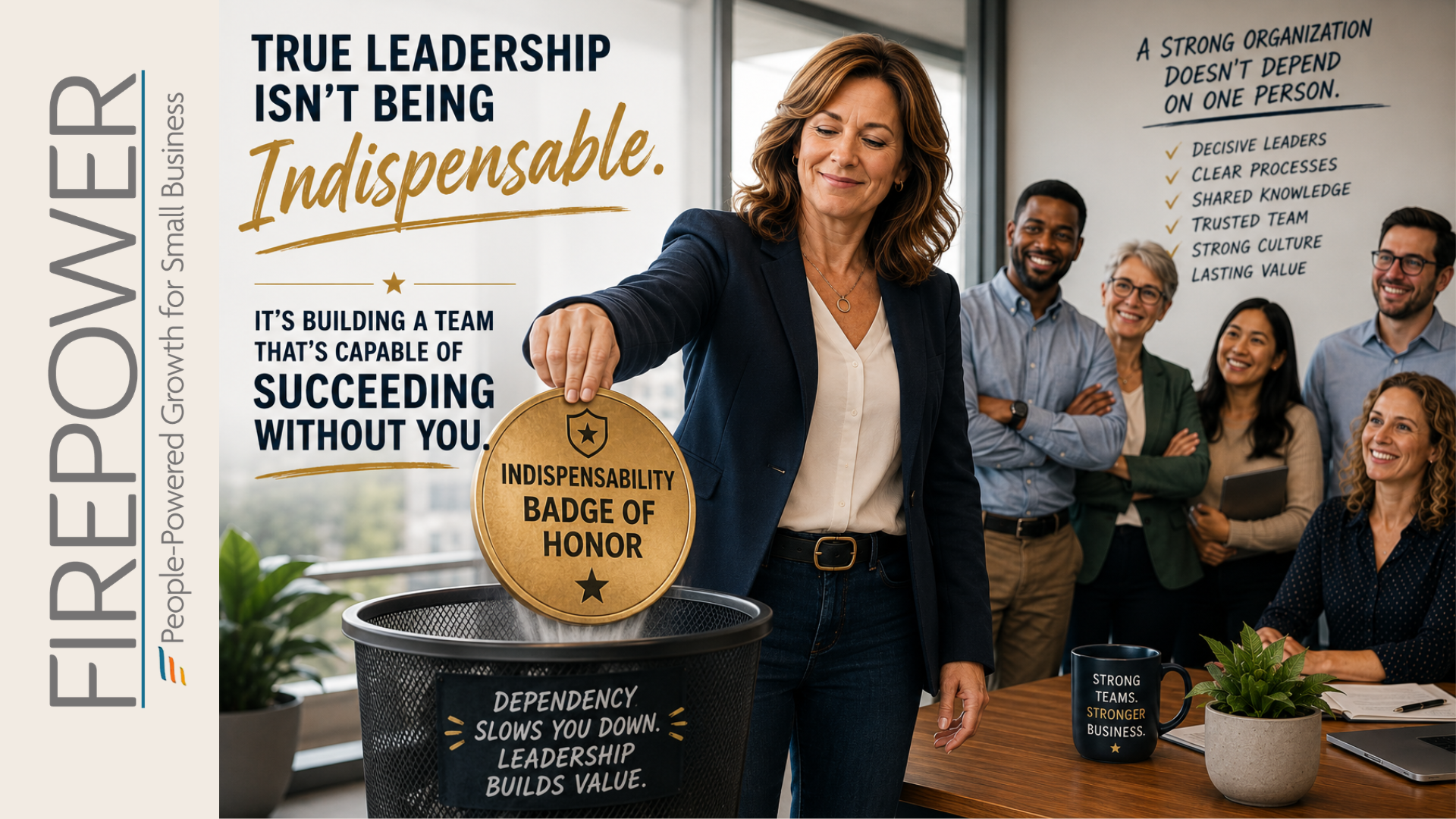
Alignment Should Reduce Owner Dependence
A privately held business can grow in revenue, employees, and customers while remaining highly dependent on its owner.
If the owner is still the primary decision-maker, relationship-holder, problem-solver, and source of institutional knowledge, the company may be larger, but the organization may not be stronger.
True alignment begins to change that.
Team members understand where the business is going and why. They know how their work contributes to growth. They understand what they own. And they have the capability and authority to act.
–> Responsibility begins to move outward.
–> Decision-making becomes less concentrated.
–> Leadership capacity grows throughout the organization.
That’s important for growth.
It’s essential for exit.
Because preparing for an eventual transition isn’t simply about preparing for a transaction. It’s about building an organization that can keep performing when the owner is no longer at the center.
Building the Organization Your Future Business Needs
Growth changes the business.
Exit changes the standard.
Your organization must change with both.
That’s when alignment becomes more than communication.
It becomes organizational capacity.
And when responsibility, knowledge, decision-making, relationships, and leadership begin moving beyond the owner, you’re doing more than preparing your team for growth.
You’re building a business that can thrive beyond you.
That’s the difference between an owner-dependent business and a people-powered one.
Where Does Your Alignment Gap Begin?
Start with the seven questions.
Ask them individually, not just around the leadership table. Listen for differences in the answers, untapped capabilities, unclear ownership, and places where the organization still depends on you.
These conversations will reveal what needs to change. Have them before mobilizing your next stage of growth or preparation for exit.
FIREPOWER Teams helps business owners uncover the capabilities already within their organizations, align their people around business priorities, and build the leadership and organizational capacity needed for growth and eventual transition.
Because building business value isn’t only about growing the business you have today.
It’s about building the organization you’ll need tomorrow.
Contact Maria for a complimentary 30-minute conversation about bridging the alignment gap in your business: https://calendly.com/maria-firepowerteams/complementary-discovery-consultation